Fully Automated Egg Incubator
ATmega328P climate control and egg turning that hatched every pigeon egg in 18 days.
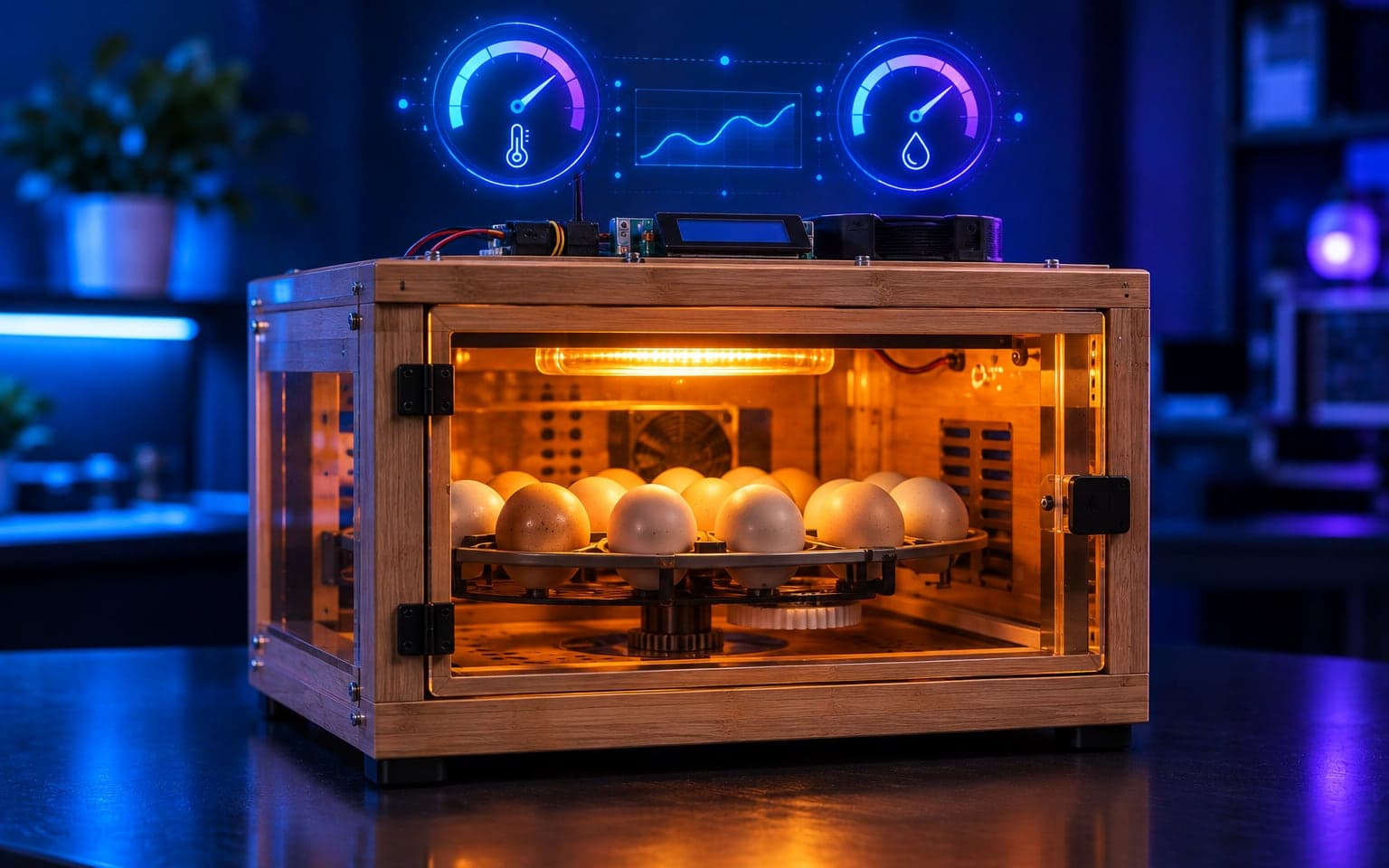
Temperature and humidity are held in tight bands by a heater, fan and water unit, a stepper motor turns the eggs on schedule, and an LCD and buzzer report status and alarms. The incubator held 50–64% humidity during incubation and 65–76% during hatching.
README · rendered from GitHub
Fully Automated Egg Incubator






Abstract
The "Fully Automated Egg Incubator" is a microcontroller-based system designed to regulate temperature, humidity, and periodic egg rotation to ensure optimal hatching conditions. It uses the ATmega328P microcontroller, temperature/humidity sensors, and actuators like a stepper motor and relay to fully automate the incubation process.
Objectives
- Automatically control and monitor temperature and humidity
- Periodically rotate the eggs using a stepper motor
- Display real-time environmental conditions on a 16x2 LCD
- Alert users via a buzzer in case of abnormal conditions
What Is the Egg Incubation Process?
Egg incubation is the process of maintaining the right environmental conditions—primarily temperature, humidity, and egg turning—to allow an embryo to develop into a chick (or another bird) inside the egg until it hatches.
Key Elements of the Incubation Process
| Parameter | Ideal Range (for chickens) | Purpose |
|---|---|---|
| Temperature | 37.5°C ± 0.5°C (99.5°F) | Supports proper embryonic development |
| Humidity | 50–55% (first 18 days), 65–70% (last 3 days) | Prevents dehydration or overhydration; aids in successful hatching |
| Turning Eggs | 3–5 times daily (until day 18) | Prevents the embryo from sticking to the shell and ensures even growth |
| Ventilation | Fresh air is crucial | Embryo requires oxygen and produces CO₂ |
| Incubation Duration | ~21 days for chicken eggs | Varies by species (e.g., 28 days for ducks, 17 days for pigeons) |
Stages of the Incubation Process
-
Day 1–7: Embryo Formation
- Heartbeat begins
- Circulatory system forms
-
Day 8–14: Organ Development
- Beak, feathers, and limbs form
-
Day 15–18: Final Development
- Embryo takes up most of the egg space
- Turning is stopped after Day 18
-
Day 19–21: Hatching Period
- Chick moves into hatching position
- Breaks shell using egg tooth
Traditional Incubator
Features of this incubator
-
Automatic Egg Rotation
- Uses a stepper motor to rotate eggs periodically.
- Simulates natural hen-like rotation to prevent yolk sticking.
-
Temperature Monitoring and Control
- Dual temperature sensors:
- DS18B20 for high-precision temperature readings.
- DHT11 for basic temperature and humidity data.
- Controls a heating element via a relay to maintain temperature between 36–40°C.
-
Humidity Monitoring and Control
- Monitors humidity using the DHT11 sensor.
- Activates relay-controlled elements (like water trays or humidifiers) when humidity drops below safe levels (e.g., <60%).
-
Real-time LCD Display
- Shows current temperature and humidity.
- Refreshes every few seconds for up-to-date environmental info.
-
Alert System (Buzzer)
- Sounds an alarm if:
- Temperature goes outside 35–41°C.
- Humidity falls outside 45–70%.
- Ensures fast response to critical conditions.
-
Manual Control Option
- Includes physical buttons for calibration and hatch mode activation.
- Allows manual override and user input.
-
Hatch Mode
- Switches to adjusted settings during the hatching phase.
- Modifies humidity threshold and disables egg rotation automatically.
-
Calibrated Delay Settings
- Adjustable LCD display refresh and rotation interval via jumper pins.
- Offers fine-tuning for different egg types.
-
Simple, Low-Cost Hardware Setup
- Built around Arduino-compatible ATmega328P.
- Uses affordable and readily available components.
-
Real Environment Tested
- Successfully incubated and hatched a pigeon's egg.
- Validated under real-world conditions (not just simulated).
---
Components
These connection are just for reference you can change them according to the code.
-
ATmega328p
-
DHT11 Temperature and Humidity Sensor
-
Stepper Motor and Driver
-
Liquid Crystal Display (LCD 16x2)
-
DS18B20 Temperature Sensors
-
Relay Module (for Heat Control)
-
Buzzer
-
Buttons for user input
Methodology
1. System Design
The incubator system is centered around the ATmega328P microcontroller, interfacing with various sensors and actuators:
-
Sensors
- DHT11: Monitors temperature and humidity
- DS18B20: Provides accurate temperature readings
-
Actuators
- Stepper Motor: Periodically rotates eggs
- Relay Module: Controls the heating element
- Buzzer: Alerts when environmental conditions are abnormal
-
Display
- 16x2 LCD: Shows real-time temperature and humidity readings
2. Control Logic (Firmware)
- Developed using Arduino IDE (C++)
- Continuously reads sensor values
- Performs:
- Heating control via relay
- Humidity regulation
- Egg rotation
- Error alerting using a buzzer
- LCD updates for user feedback
3. Modes of Operation
- Normal Mode: Active monitoring and control
- Hatch Mode: Activated via button; disables rotation and adjusts humidity thresholds
- Calibration Mode: Allows for setup adjustments and visual feedback
4. Hardware Setup
- Components connected via breadboard
- Reliable power supply to run sensors, display, motor, and controller
| Component | Arduino Pin |
|---|---|
| DHT11 | Pin 13 |
| DS18B20 | Pin 2 |
| LCD (rs–d7) | Pins 12–6 |
| Stepper Motor | Pins 3–5 |
| Relay | A1 |
| Buzzer | A0 |
| Button | A2 |
| Hatch Trigger | A3 |
| Delay Jumper | Pin 7 |
5. Testing & Validation
- System tested using a pigeon egg
- Environmental conditions were successfully maintained
- A chick was successfully hatched, validating system functionality
Results
https://github.com/user-attachments/assets/74fe12b2-0fb4-42b3-a45b-664a12b02d2b
More in Embedded
Related projects
 Embedded2025
FreeRTOS Smart Energy Monitor
STM32F746 tasks compute Vrms, Irms and kWh; an ESP32 pushes it to a cloud dashboard.
- STM32F746
- FreeRTOS
- ESP32
- C/C++
 Embedded2024
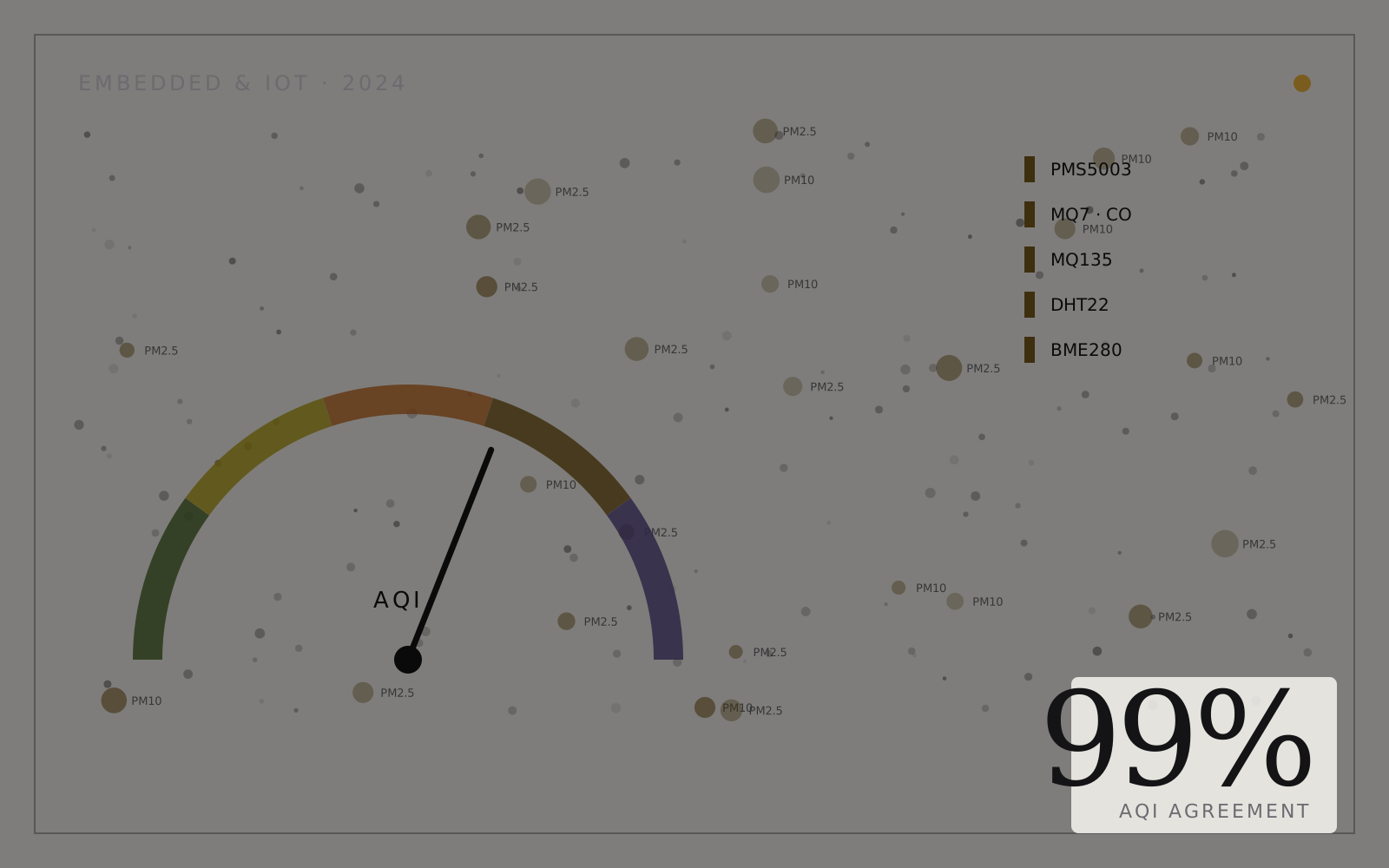
Crowd-Sourced AQI Monitor
Six sensors, Bluetooth to a phone app, and AQI within 1% of the US Embassy station.
- Arduino UNO
- C/C++
- PMS5003
- MQ-series
 Embedded2024
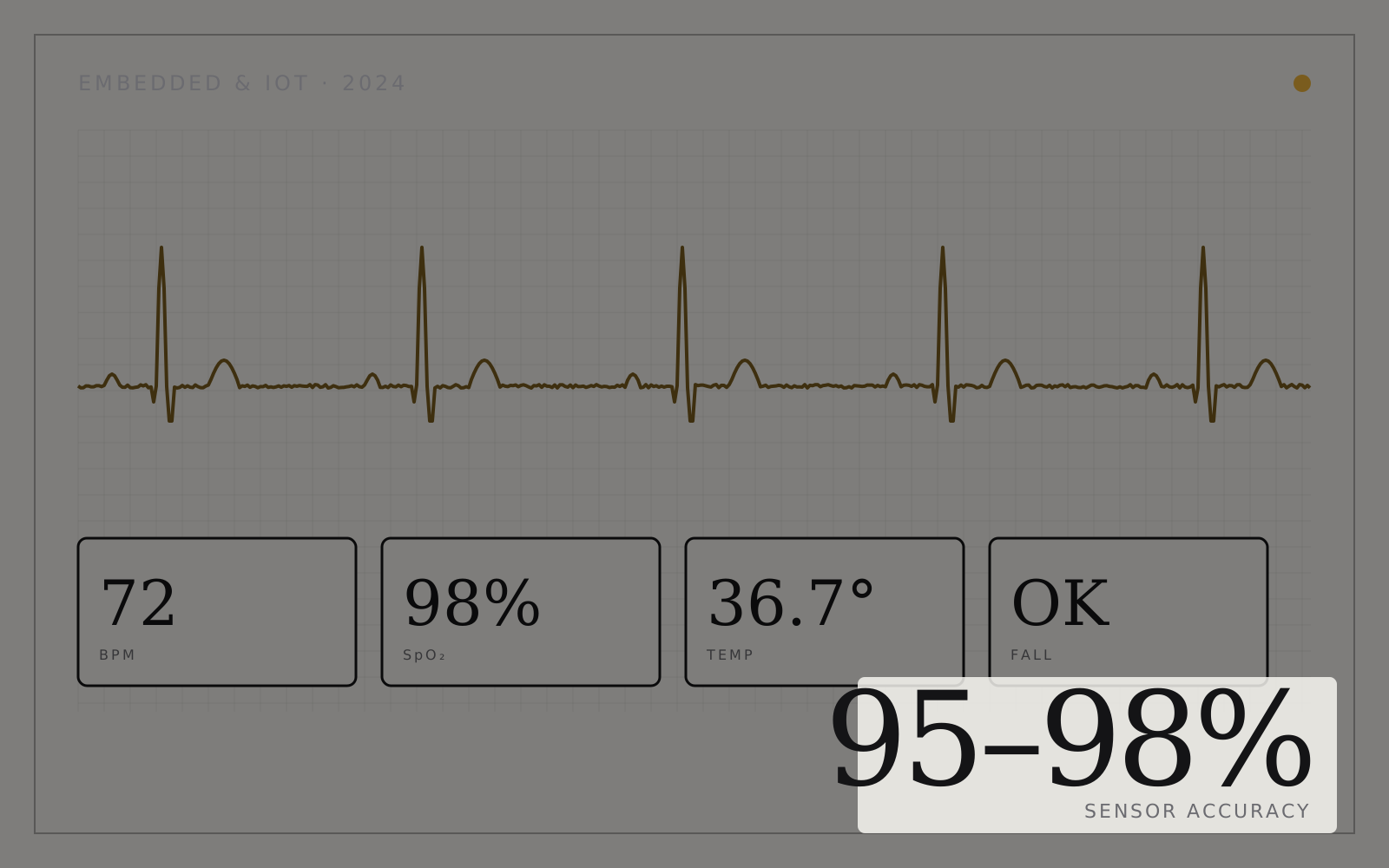
Smart Health Tracking System
ECG, SpO₂, heart rate, temperature and fall detection on one wearable node.
- Arduino UNO
- C/C++
- AD8232
- MAX30100