PID Ball Balancing System
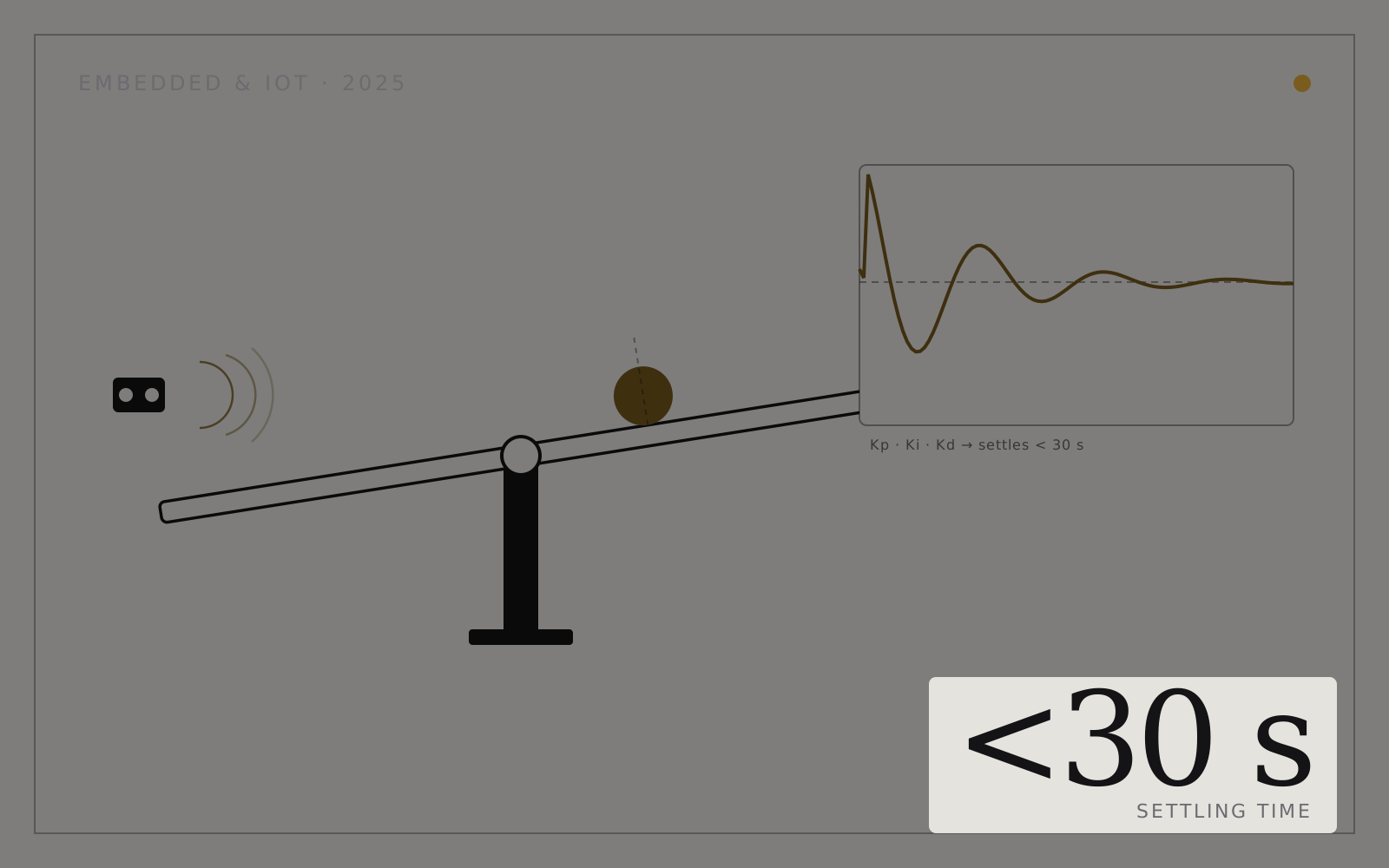
A one-axis beam that settles a ball at a target distance in under 30 seconds.
An ultrasonic sensor measures ball position, a PID loop drives a servo to tilt the beam, and Kp, Ki and Kd can be tuned live over serial. Includes stability detection and an automatic reset to neutral.
README · rendered from GitHub
PID-Controlled One-Axis Ball Balancing System






PID-based one-axis ball balancing robot using Arduino. Uses an ultrasonic sensor and servo motor to stabilize a ball at a target distance. Real-time tuning of Kp, Ki, Kd via Serial. Includes stability detection and automatic neutral reset. The system stabilizes within 30s using empirically tuned parameters.
🖼️ Project Overview
🧪 Final Project Hardware
✨ Features
- PID Control for dynamic stability.
- Real-time sensor feedback using IR or ultrasonic sensors.
- Servo motor-driven beam for accurate actuation.
- Low-cost microcontroller implementation (Arduino/STM32).
- Serial Monitor & LCD integration for live debugging.
🛠️ System Architecture
📽️ Demo
🔌 Circuit Diagram
🧾 Project Summary
This Arduino-based system controls the position of a ball on a beam using PID control and real-time feedback from an ultrasonic sensor. The ball is returned to a setpoint by tilting the beam via a servo motor, compensating for positional error.
⚙️ How It Works
- Sensing: Ball position is measured using HC-SR04.
- Filtering: Distance values are filtered (moving average).
- Error Calculation:
error = distance - setpoint - PID Control:
- P: Immediate reaction to error
- I: Compensates for past errors
- D: Predicts upcoming trends
- Servo Adjustment: Beam angle is changed proportionally to the PID output.
- Stability Monitoring: If error stays < 3 cm for 2.5 seconds, servo resets to neutral.
🧠 Control Strategy
A classic PID (Proportional-Integral-Derivative) loop is implemented:
Error = Desired Position - Actual Position
PID Output = Kp * Error + Ki * ∫Error + Kd * (dError/dt)
Final tuned values:
Kp = 5Ki = 0.01Kd = 9
Main Code Logic
error = distance - setpoint;
integral += error;
derivative = error - previous_error;
output = -(Kp * error + Ki * integral + Kd * derivative);
servoAngle = constrain(neutralAngle + output * 1.2, 0, 180);
myServo.write(servoAngle);
- PID gains can be tuned via Serial commands.
- System resets to neutral if error stabilizes or ball goes out of range.
🧪 PID Tuning via Serial Monitor
Kp 5         → Set proportional gain
Ki 0.01      → Set integral gain
Kd 9         → Set derivative gain
neutral 34   → Set neutral servo angle
servo -20    → Move servo from neutral
🔩 Hardware Components
| Component | Description |
|---|---|
| Beam | 30–50 cm acrylic/wood beam, pivot-mounted |
| Ball | Lightweight ping-pong ball |
| Servo Motor | SG90 (light load) or MG996R (high torque) |
| Position Sensor | - IR (GP2Y0A21) for analog - Ultrasonic (HC-SR04) for digital timing |
| Microcontroller | - Arduino Uno (simple) - STM32 Blue Pill (faster) |
| Power Supply | 5V via USB or external battery pack |
| Optional Display | 16x2 I2C LCD (PID values, position, error) |
| Accessories | Breadboard, jumpers, brackets, bearings, screws, etc. |
📁 Repository Contents
PID-Controlled-One-Axis-Ball-Balancing-System.ino– Core Arduino codeProject_Proposal.pdf– Initial planningProject_Presentation.pptx– Final presentationProject_Report.pdf– Detailed documentationDemo Video.mp4– Final working demoCicuit Diagram.jpg– Wiring reference (check spelling)Project Picture.jpg– Setup image
🧰 Tech Stack
- Arduino Uno
- HC-SR04 Ultrasonic Sensor
- SG90 Servo Motor
- Serial Monitor for real-time control
- PID control logic (manual tuning)
✅ Results
- System stabilized within 30 seconds of a disturbance
- PID parameters:
Kp = 5,Ki = 0.01,Kd = 9 - Stability detection reduces unnecessary movement
🚀 Future Enhancements
- 2-axis (X-Y) balancing system
- Vision-based tracking using OpenCV or IR grid
- Self-tuning PID or ML-based control
- Wireless monitoring via Bluetooth/Wi-Fi
- MATLAB or Python-based simulation-first approach
👨💻 Authors
This project was created at National University of Sciences & Technology (NUST) as part of the Linear Control Systems course project by:
- Awais Asghar
- Muhammad Ashar Javid
- Ameer Hamza
- Muhammad Hammad Sarwar
📜 License
This project is licensed under the MIT License. See LICENSE file for details.
📚 References
- Åström & Hägglund, Advanced PID Control, ISA
- Ogata, Modern Control Engineering, Pearson
- Arduino PID Library
- MathWorks MATLAB Control Toolbox
More in Embedded
Related projects
 Embedded2025
FreeRTOS Smart Energy Monitor
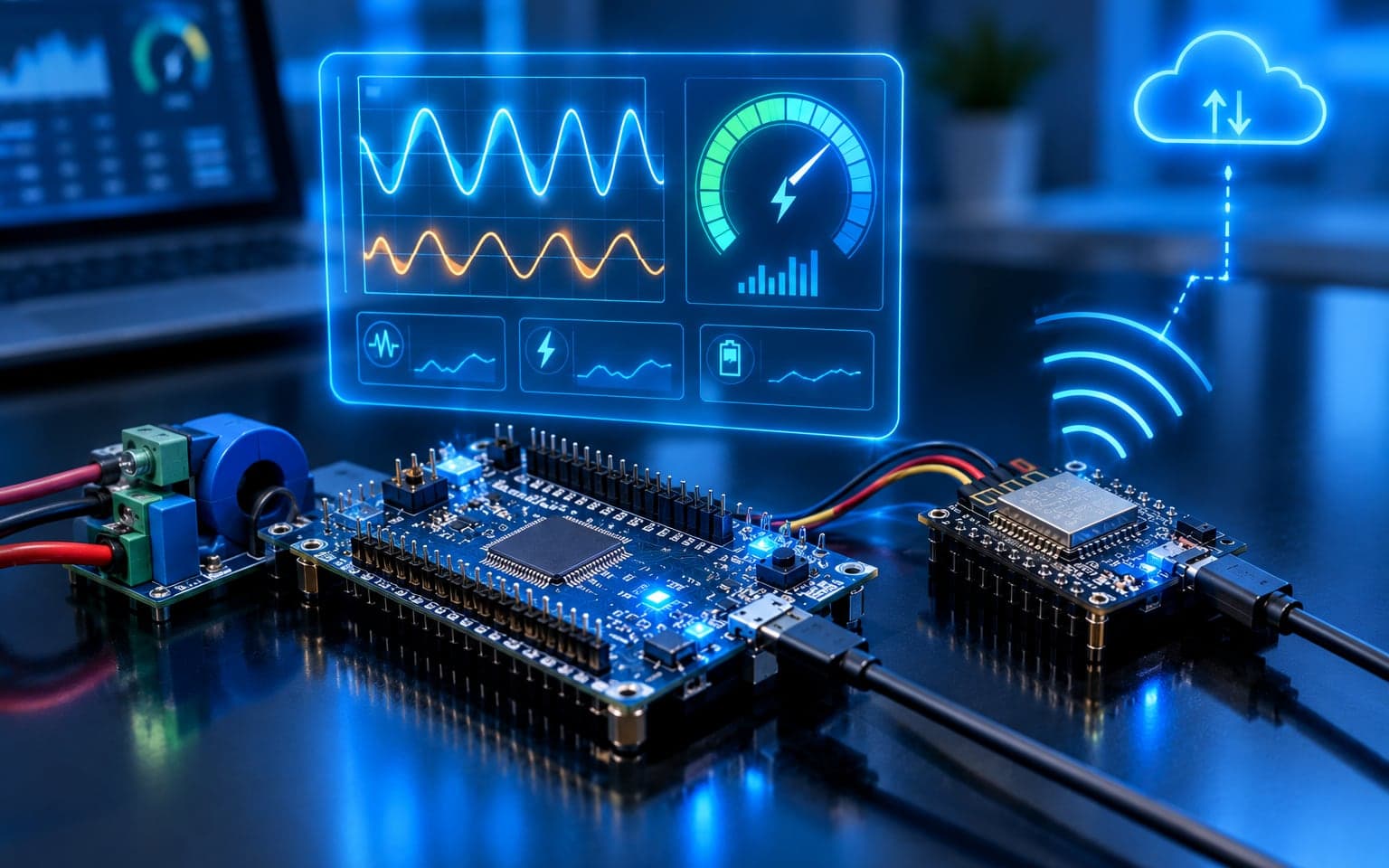
STM32F746 tasks compute Vrms, Irms and kWh; an ESP32 pushes it to a cloud dashboard.
- STM32F746
- FreeRTOS
- ESP32
- C/C++
 Embedded2024
Crowd-Sourced AQI Monitor
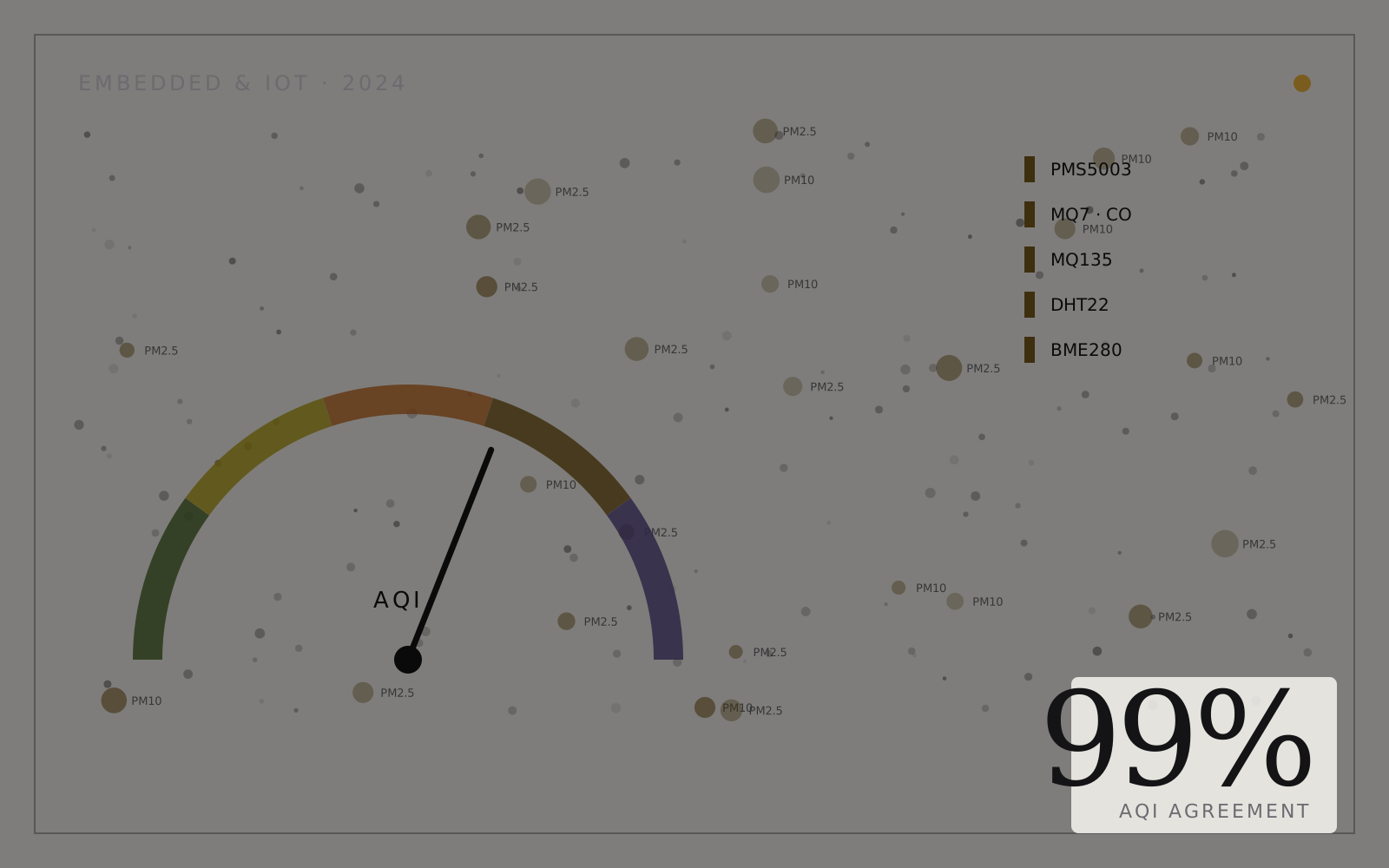
Six sensors, Bluetooth to a phone app, and AQI within 1% of the US Embassy station.
- Arduino UNO
- C/C++
- PMS5003
- MQ-series
 Embedded2024
Fully Automated Egg Incubator
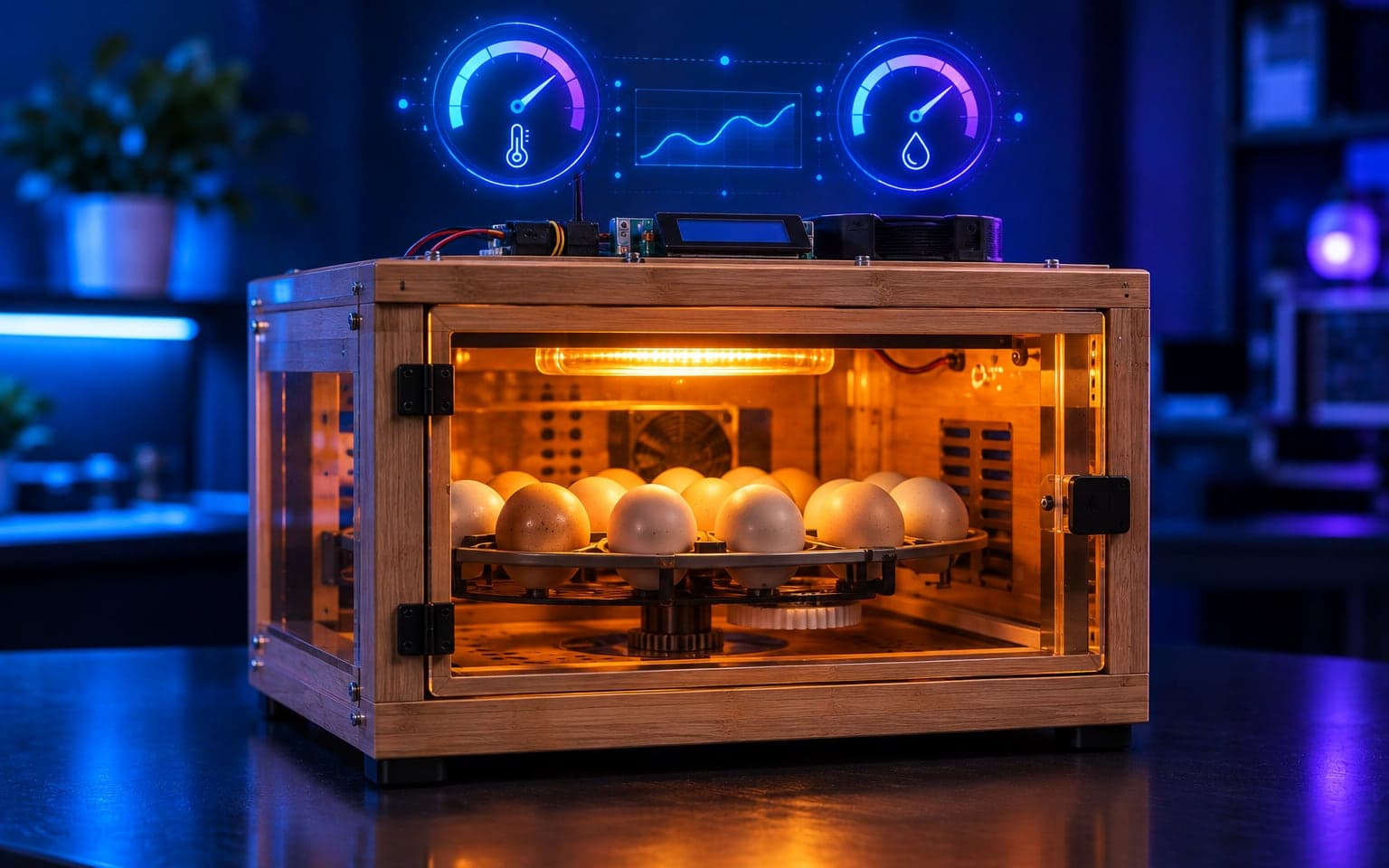
ATmega328P climate control and egg turning that hatched every pigeon egg in 18 days.
- ATmega328P
- Arduino IDE
- Atmel Studio
- Proteus